

A family-owned restaurant: orders transformed, errors dramatically down
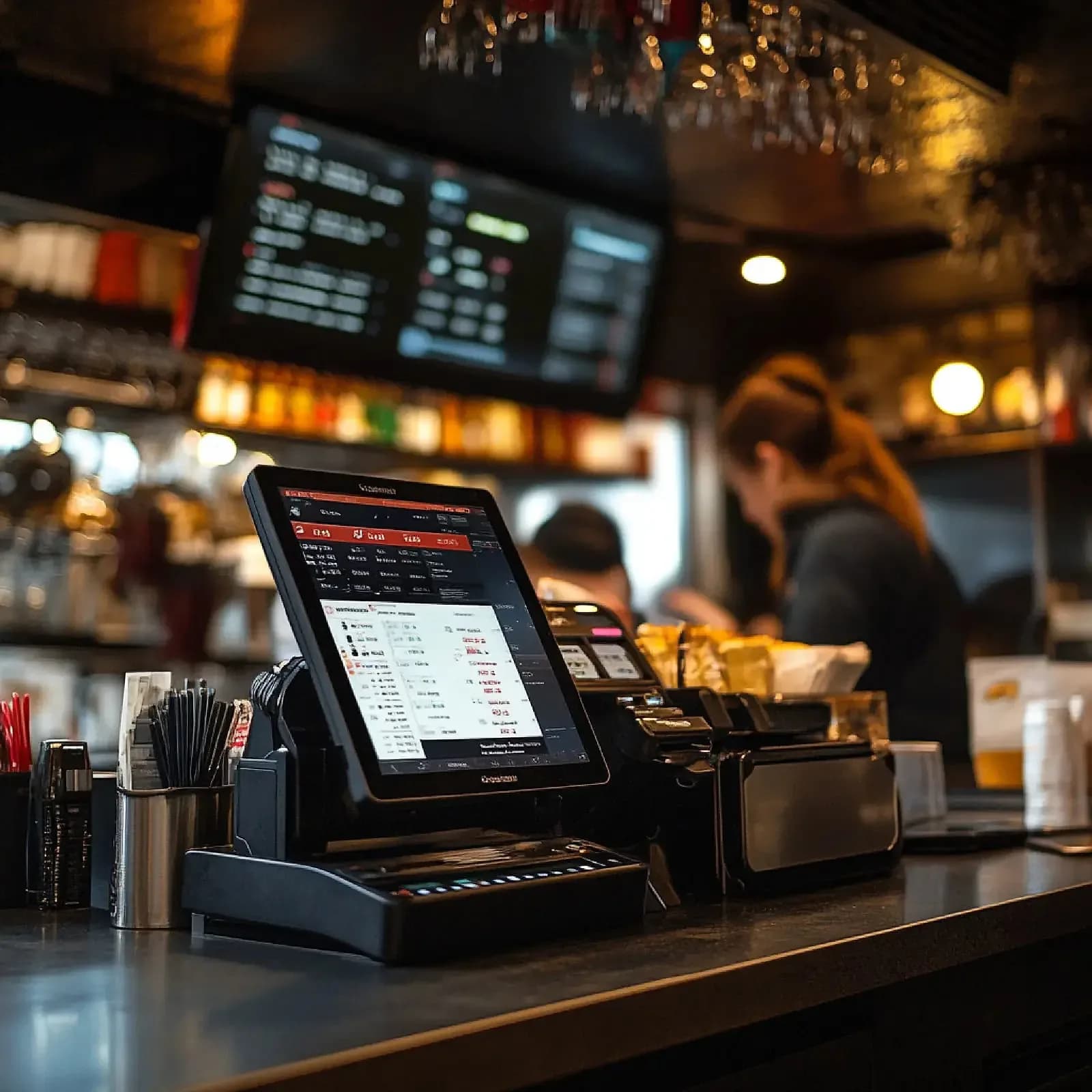
A family-owned restaurant replaced manual order-taking with Merilsoft's AI-driven restaurant ordering system — and changed how the whole restaurant runs.
- Kitchen re-fires from mis-keyed orders
- Cut to a rare exception, not a nightly occurrence
- Register line at peak
- 8-person queue down to a couple of minutes
- New staff time-to-solo
- One shift of shadowing, ~20 minutes of walkthrough
This family-owned restaurant was running its dining room and counter the way most independent restaurants do — a cashier keying orders by hand and a paper ticket walked back to the kitchen. It worked, until the Friday dinner rush stacked eight or nine people deep at the register and a smudged ticket meant a dish came back wrong, re-cooked at the kitchen's expense.
Merilsoft deployed its AI-driven restaurant ordering platform over a five-week engagement — digitizing the menu and modifier rules, connecting delivery-app orders into a single queue, and putting a live sales-and-stock dashboard in front of the owner for the first time. Kitchen re-fires from mis-keyed orders dropped to a rare exception, the register line at peak went from an eight-person queue to a couple of minutes, and a new hire now runs the register solo after a single shift of shadowing.
Client overview
The restaurant is a single-location, family-run dining room with a busy bar counter and a full kitchen, owned and run day-to-day by Farid. Like most independent restaurants, it grew its process organically — a cash register, a notepad, and whichever staff member happened to be fastest at both. Weekend dinner service is the restaurant's highest-volume, highest-margin window, and the one most exposed to a slow or error-prone order flow.
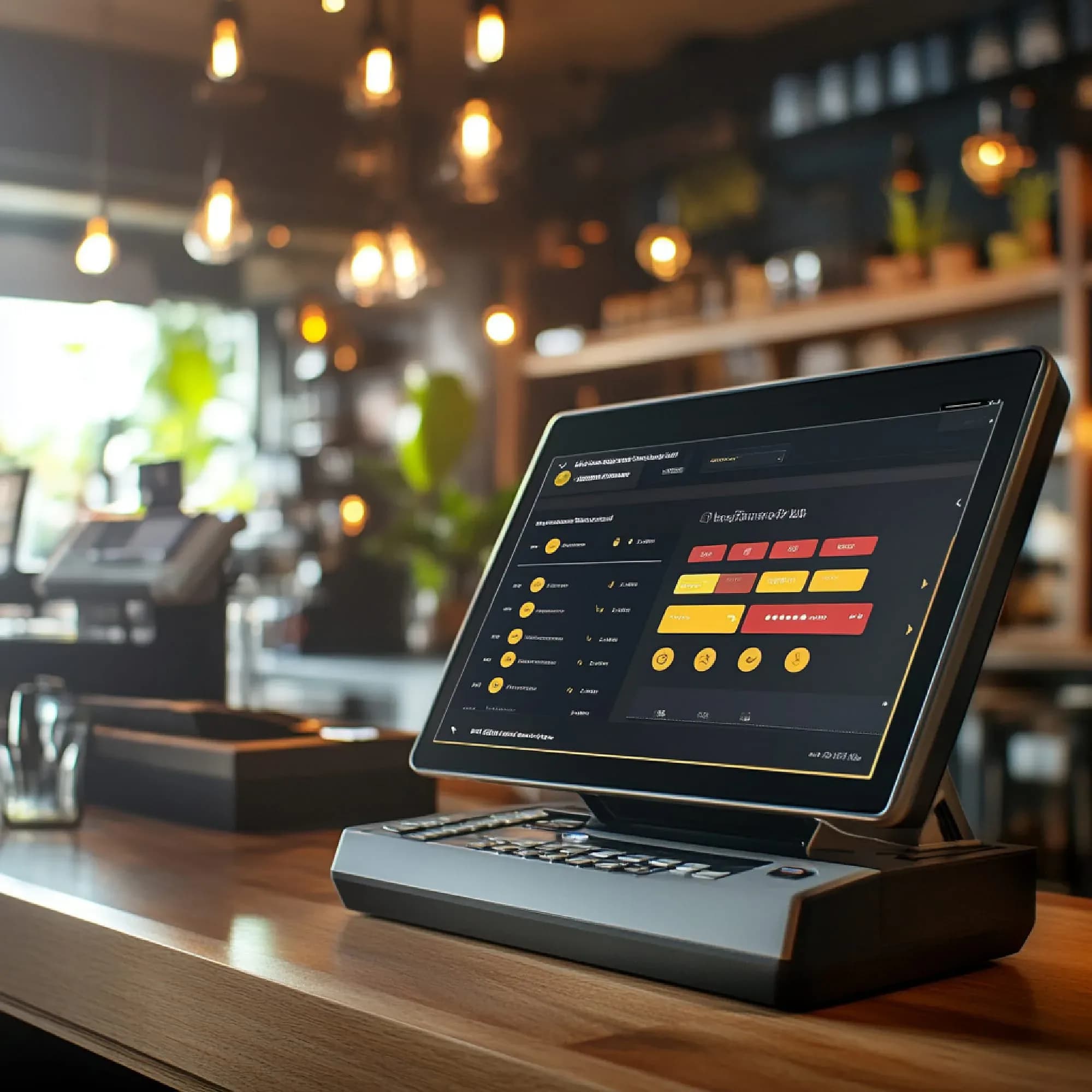
Delivery-app orders had become a meaningful share of weekly revenue by the time this engagement started, arriving on a tablet that lived apart from the main register — its own screen, its own workflow, and its own point where an order could get lost.
The challenge
A paper ticket in a heat-lamp kitchen
The restaurant ran its counter the way most independent restaurants do: a cashier keying orders by hand and a paper ticket walked back to the kitchen. On a busy Friday dinner rush, that line at the register could back up eight or nine people deep, and a smudged or misheard ticket meant a dish got fired wrong — and re-cooked, at the kitchen's expense in time and ingredients.
Where the paper trail broke down hardest
A party of six splitting modifiers across three courses meant a cashier hand-writing a ticket dense enough to misread under kitchen heat-lamp glare. Delivery-app orders arrived on a separate tablet, so a second staffer had to manually re-key them into the same paper-ticket flow — one more hop where an order could get lost or duplicated.
Nothing showed up until the day was done
None of it showed up anywhere until the day was done. Farid wouldn't find out which items were close to running out, or which combo actually sold that night, until he sat down with the till after closing — which meant prep for the next day was still a guess, not a plan.
Project objectives
- Replace hand-written tickets with digital order capture that catches a conflicting modifier before it reaches the kitchen.
- Fold delivery-app orders into the same queue as counter orders — no second tablet, no manual re-keying.
- Give the owner a same-shift view of sales and stock instead of a once-a-day till count.
- Get a new cashier to solo on the register in one shift, not a week of trailing a veteran.
Discovery & business analysis
Discovery ran the way it has to in a restaurant that never stops serving. Instead of booking Farid into meetings, Merilsoft worked on site while service was actually running — watching a cashier key orders by hand at the counter, following a paper ticket back to the kitchen, and paying attention to the ones that came back wrong. Farid walked the menu boards between services and answered what the boards couldn't: which combos the kitchen actually allows, which modifiers cancel each other out, why a particular dish is never fired a particular way. That was the whole requirements phase — watch the work where it happens, then ask the one person who knows why it works that way.
Two things came out of it. The first was that the restaurant's real menu didn't exist anywhere on paper. The boards listed dishes and prices, but the rules — the combinations the kitchen honors and the ones it quietly refuses — lived only in Farid's head and in the habits of the staff who had worked there longest. The second was that the errors weren't landing at random. They gathered at two points: a large party splitting modifiers across courses, and a delivery order being re-keyed off the second tablet. Both were the same moment — a cashier transcribing an order instead of just taking one.
Those findings set the shape of the build. Because the combo rules weren't written down anywhere, the first two weeks went into pulling them out of Farid's knowledge and encoding them properly — which is why the modifier engine ended up as a relational schema rather than a flat list of menu items, since the conflicts needed somewhere to live. And because Friday and Saturday dinner carry the restaurant, Merilsoft sequenced the rollout to keep those nights for last: a pilot on two slower weeknights, the paper tickets still on standby at the register, and the delivery-app integration held back to the final week, so the counter flow had already survived real volume before a second order source was pointed at it.
Solution architecture
A fully digitized menu, piloted before the rush
Merilsoft deployed its AI-driven restaurant ordering platform, starting with a full digitization of the restaurant's menu — every dish, modifier, and combo rule mapped so the system could catch a conflicting order before it ever reached the kitchen. Rollout ran as a soft pilot across two slower weeknight services before going live for the Friday rush, so staff hit their first real crunch on a system they'd already touched.
One queue, one dashboard, one PIN
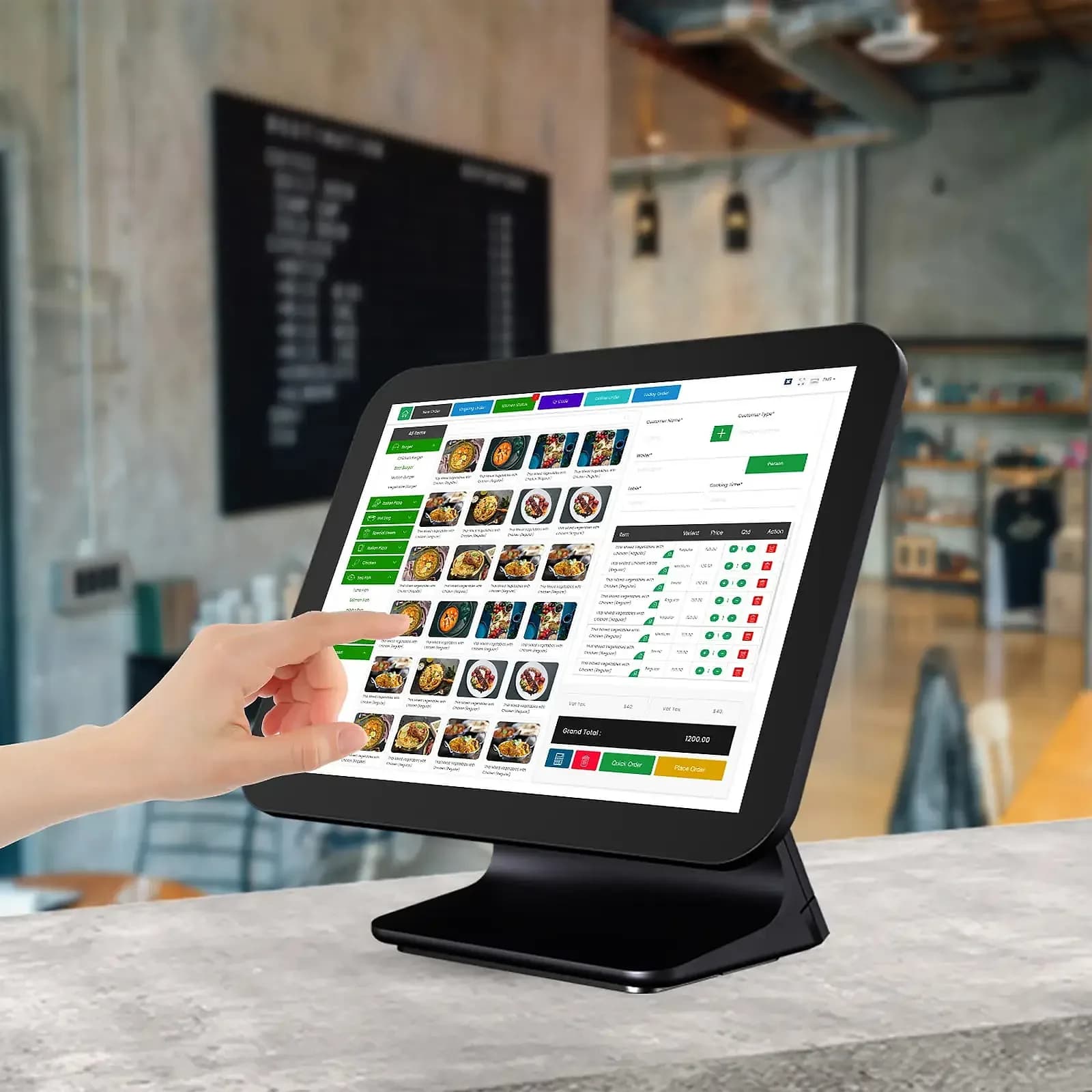
Order capture now flags conflicting modifiers at entry instead of after the fact, tickets print at the kitchen station within seconds of the order being placed, and delivery-app orders land in the same queue as counter orders — no second tablet, no manual re-keying. A live dashboard tracks what's selling and what's running low as the shift happens, not after it. Voids and reprints now require a manager PIN, closing the gap where a mis-keyed order used to slip straight through to the kitchen unnoticed.
Onboarding built around one shift
Onboarding was built around a single shift: a new cashier shadows one rush, then runs the register solo the next. Farid now pulls up the previous night's dashboard each morning to set prep quantities, instead of estimating from memory.
Technology stack
| Component | Technology | Why |
|---|---|---|
| Counter & kitchen display | React Native tablet app | Touch-first order entry that runs on commodity Android tablets at the register and pass |
| Order routing | Node.js + WebSockets | Sub-second ticket delivery from register to kitchen display, no printer round-trip |
| Menu & modifier engine | PostgreSQL relational schema | Encodes combo and modifier conflict rules so a bad order is caught at entry, not at the pass |
| Delivery aggregation | Webhook integrations | Normalizes third-party delivery-app orders into the same queue as counter orders |
| Manager controls | Role-based PIN authentication | Gates voids and reprints without standing up a full staff-account system |
| Reporting | Lightweight analytics dashboard | Same-shift visibility into sales and stock instead of an end-of-day till count |
Key features
Modifier conflict checking
Before
Hand-written tickets for complex modifier orders were misread under kitchen lighting
Now
Order entry validates combos and modifiers the moment they're keyed
Kitchen re-fires cut to a rare exception
Unified order queue
Before
Delivery-app orders needed manual re-keying from a second tablet
Now
Delivery orders land in the same queue as counter orders automatically
One less hop where an order could get lost or duplicated
Live sales & stock dashboard
Before
Prep quantities were a guess until the till was counted after close
Now
Real-time dashboard shows what's selling and what's running low mid-shift
Next-day prep planned from data, not memory
Manager-PIN voids
Before
A mis-keyed order could slip straight to the kitchen unnoticed
Now
Voids and reprints require a manager PIN
Closes the gap that let bad orders through silently
Rollout & delivery
The engagement ran roughly five weeks end to end. The first two weeks went into digitizing the full menu — every dish, modifier, size, and combo rule — working directly from the restaurant's existing menu boards and Farid's own knowledge of which combinations the kitchen actually allows.
Rather than flipping the whole restaurant over on day one, Merilsoft ran the new system as a soft pilot across two slower weeknight services, with the old paper-ticket flow kept on standby at the register in case anything needed a fallback. Staff feedback from those two nights went straight into tightening the modifier rules and the kitchen-display layout before the system carried its first Friday rush unassisted.
Delivery-app integration and the manager-PIN void controls went live in the final week, once the core ordering flow had already proven itself under real weeknight volume.
Challenges along the way
The counter's Wi-Fi wasn't built for this
The restaurant's existing internet connection had never needed to be reliable — a dropped connection used to just mean a slow credit-card swipe. A tablet-based order system raised the stakes: a lost connection mid-order at Friday rush would have been worse than the paper ticket it replaced. Merilsoft added a local offline queue to the counter tablet so orders keep entering and printing to the kitchen even through a brief drop, syncing back to the dashboard the moment the connection returns.
Staff trusted the paper ticket more than the screen, at first
A couple of longtime staff had run the paper system for years and were skeptical a tablet would actually be faster under real rush pressure. Rather than argue the point, Merilsoft ran the two-night pilot with the paper ticket still available as backup — once the modifier-catching feature caught its first real kitchen error on night one, the skepticism mostly resolved itself.
The impact
The clearest change showed up at the register during Friday and Saturday dinner rush, the restaurant's highest-volume window: a queue that used to run eight or nine people deep now clears in a couple of minutes, because order entry itself moves faster and nothing gets held up re-keying a delivery order from a second tablet.
Kitchen re-fires — a dish sent back and re-cooked because the ticket was misread or a modifier conflicted with the base order — went from a regular Friday-night occurrence to a rare exception, since the system now catches a conflicting order before it ever reaches the pass. And Farid no longer waits until closing to know what to prep for tomorrow; the live dashboard gives him that picture as the shift happens.
Additional value delivered
The manager-PIN control on voids and reprints was never on the objective list. It came out of watching the counter: a mis-keyed order could slip straight through to the kitchen with nobody the wiser, and the void and the reprint at the register were where that gap lived. Gating both behind a manager PIN closed it, and closed it without standing up a full staff-account system — no logins to issue, no password for a new hire to forget on their first Friday. Farid never asked for a control on voids. He has one now, and it costs him nothing on the nights nothing goes wrong.
The bigger asset is the menu itself. Two weeks of digitization turned a set of boards and one man's memory into a schema that spells out every dish, size, modifier, and combo rule the kitchen honors. That is now something the restaurant owns rather than something it remembers. A price change or a new dish gets entered once, and the register and the kitchen display work from the same definition of it — and if Farid isn't on the floor, the rules don't leave with him.
Two pieces of the build ended up more general than the problem they were written for. The delivery integration normalizes third-party orders into the restaurant's own queue over webhooks, so the queue doesn't much care which app an order arrived from — pointing another one at it is closer to a mapping job than a rebuild. And the offline queue on the counter tablet, added because the restaurant's Wi-Fi had never needed to be reliable, means a brief drop no longer stops order entry: tickets keep reaching the kitchen and sync back to the dashboard once the connection returns. Nobody asks for that until the night it matters.
“Merilsoft's restaurant ordering system completely transformed how we manage orders and enhance customer experience. The AI-driven interface is intuitive, fast, and has dramatically reduced errors.”
Lessons learned
- Piloting on two slow weeknights before the first Friday rush meant the system's rough edges got found and fixed on a night that could absorb a mistake, not the night that couldn't.
- Keeping the old paper-ticket flow available as a visible backup during the pilot did more to win over skeptical staff than any amount of reassurance would have — they needed to see it hold up under pressure once.
- An offline order queue turned out to be a requirement, not a nice-to-have, the moment order entry moved from a cash register to a tablet dependent on the restaurant's own Wi-Fi.
None of this required the restaurant to change what it serves or how Farid runs his kitchen — only how an order gets from a customer's request to a cook's hands, and how much Farid can see about his own business without waiting for the day to end. That's usually where the biggest, fastest win is sitting in a restaurant that's still running on paper.
Your operation could be next
Tell us how you run today — we'll show you what changes, with numbers.
Or call us: 1-225-573-9244